Top Travel Leads

island hopping

Valentines Vacations

by on Jan.20, 2011, under beach time, island hopping, romantic destinations, Seychelles

Are you looking to treat your loved one by taking them away on holiday this year?

Going on a romantic sojourn for Valentine’s Day can certainly be a good way to show just how much you care about that special someone in your life and with so many places making fantastic destinations for this kind of break, you and your partner will certainly be spoilt for choice.

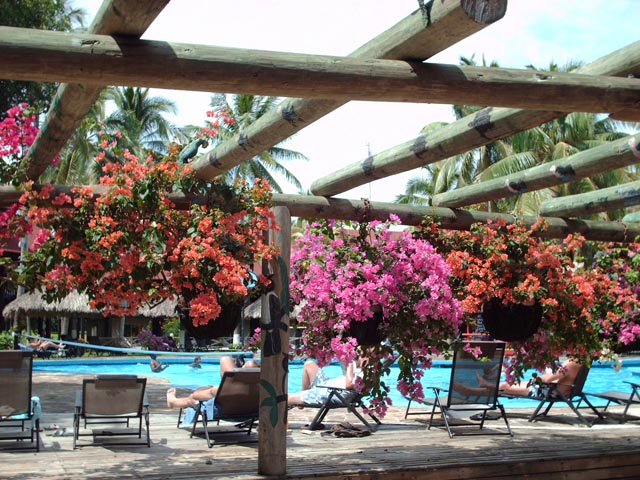
However, if you want to spend some time soaking up the sun then you may want to consider going on Seychelles holidays.

This set of African islands, situated off the continent’s west coast, can certainly be a fantastic destination for an amorous adventure and as it experiences pleasant temperatures all year round, you are sure to find there is plenty of opportunity for you to lie back and work on your tan, even in the middle of February.

Going on holidays to the Seychelles has long been popular among honeymooners but whether you’re newlywed or not, you and your loved one may be reminded of just how deeply you care for one another as you soak up the country’s magnificent scenery.

The islands contain some fascinating flora and fauna so you many want to get up close and personal to it by visiting the nature reserve on the island of Aride or stopping by the Seychelles National Museum of History on Mahe. And as Mahe contains many of the country’s other major tourist attractions, such as the Victoria Clock tower, you are sure to find that there are plenty of things for you to see and do during the course of your holiday.

However, if you want to be a little active during a Valentine’s Day vacation, you’ll be glad to know the Seychelles offers a fantastic range of watersports virtually all year round. During your trip you may want to go snorkeling, diving or sailing.

But if you and your partner fancy going somewhere a little closer to home, you could well find that Paris is an ideal destination for a romantic getaway.

The French capital is widely regarded as one of the most romantic destinations in the world, so you may want to consider taking your partner up the Eiffel Tower on February 14th to take in the city’s panoramic vistas. And to make the break extra-special why not go for a walk along the Seine before indulging in a candlelit dinner at one of the city’s world-famous restaurants?

Amsterdam can also be a great place to head to on a short city break. Taking a trip to the Dutch capital offers you and your partner the chance to see world-class museums and art galleries, while you may also want to stop by one the city’s flower markets to buy your beau a rose.

You may also want wish to consider taking your other half to Venice. The Italian destination is home to some stunning architecture, including the Piazza San Marco and St Mark’s Basilica, so you may want to spend time walking through the city’s streets before going on a gondola ride through its world-famous canals.

If you’re really looking to impress, New York can be a great place to visit for Valentine’s Day. You can take your loved one for a stroll through Central Park, before heading to a Broadway show. And for a particularly memorable break, why not take them to the top of the Empire State Building before you get down one knee and propose?

With so many romantic destinations to choose from, you will be not short of fantastic places to head to for a Valentine’s Day getaway.

Leave a Comment :, , , , , , , , , more...

Family Holidays in the Balearics

by on Nov.01, 2010, under Europe, Family vacations, island hopping, Spain

Just south of Barcelona in the Balearic Sea is the Balearic Islands, with the largest one named Majorca. The recommended times to travel would be during the months of May and October, keeping in mind that July and August are the most crowded. With a total of three hundred and seventy five advertised beaches between the four islands, you are sure to find a few to your liking.

There are times when deciding on a last minute Balearic Island holidays package would be worth your while, especially if those times happen to be in the slow season. While your weather conditions may not be ideal, your prices would be decidedly less expensive. The beaches are open all year around for your enjoyment and while the water conditions may be slightly cooler, you will have it all to yourself.

At least three of the islands stand ready to entertain you with a day full of fun filled water activities at their water parks. Make sure and check for hours of operation as some do not open all year around. Bring the entire family and enjoy rides on multi-slides, descending water Kamikaze like shoots, lazy rivers or wave pools and a pool designated just for parents and kids.

If you are fortunate enough to come across a last minute Balearic Islands holidays package for the peak season, then you are in luck, because not only will the price be right but so will the fun. Hiking is considered as a favorite past time on the islands and with so many venues to choose from like the beaches, state parks and other sights to see, is their any wonder?

As with other islands, water sports are in high demand. Whether your favorite is on top with Jet skiing, kayaking, under tow on a banana boat, or below with snorkeling and or diving, its all here. Join a group tour and head out for some fishing, or learn to sail while enjoying the sparkling Balearic sea. Nothing could be closer to paradise.

The opportunities are endless, with four islands to choose from, like traveling by bus to Formentor. This ride will afford you picturesque views like never before seen to a cove complimented by a beautiful beach. You can make the trek to S’Albufera des Grau (a nature reserve) or Es Freginal Park where you can enjoy everything that mother nature has to offer while relaxing to some jazz.

Leave a Comment more...

Travel in Indonesia: fascinating Tana Toraja culture of Central Sulawesi

by on May.20, 2009, under art & architecture, Asia, Destinations, Indonesia, island hopping, man-made wonders, remote regions, Sulawesi, unique islands, Vernacular Architecture

Massive structure of a Toraja houseFront facade of a Toraja houseTraditional house style in Central Sulawesi, Tana TorajaGranaries in a Toraja village

Structural members of a Toraja roofIn the remote parts of Central Sulawesi of the Indonesian archipelago, an-odd shaped island resembling a hunched-over letter “k”, under the Dutch known as Celebes, there can be found a saddle-roof style house type built on piles. Depicted on Dong Son drums as far back as 500BC-AD100, its origin suggests being of mainland Southeast Asia. The region is known as Tana Toraja, or Torajaland, and the characteristic house style is referred to as “tongkonan” – a traditional ancestral house of the Toraja people that inhabit these mist-shrouded valleys, averaging some 3000 feet above seas level. Visiting Sulawesi’s Toraja region is easily done from Bali and the experience is always a highlight of travel in Indonesia.

Sitting under a granaryToraja house roofOf tongue-and-groove construction, using no nails, bolts or other metal fasteners, the traditional houses are built on solid tree trunk piles high above the ground to safeguard against rodents, snakes and dampness of the tropical ground. It is the massive roofs, covered in a layered bamboo, today often by corrugated iron, that immediately catch one’s attention. The research shows that these proto-Malay peoples have originated from Cambodia. Their own lore and legends claim that their ancestors crossed the high seas to the north, suggesting they embarked off the coast of Southeast Asia. Their stories tell of storm having diverted their boats to shores of Sulawesi, thrown ashore the people used them as roofs.

s93zFact is the characteristic house type Toraja build over centuries developed only in the interior mountains that surround fertile plateaus and valleys where they live. Due to the remoteness of the region, even today some seven hours by road to the main urban port of southern Sulawesi, the mountains have protected lifestyle and customs, which have changed relatively little to this day.

A legend has it that the roof shape as well as the general shape of the house is patterned on the ships on which they sailed from their ancestral homeland. On another hand, closer look at their culture reveals worship of buffalo, which is a symbol of fertility, strength, and a protection from evil, and its horns decorate the gables of Torajan houses, hence the other theory has it the roof shape is that of a buffalo’s horn.

Whatever the shape’s origin the houses truly look as if they could sail, their sweeping roofs, especially when constructed closely together, the front of the house facing north, the direction of the ancestral homeland, look like ships moored at port. Opposite the houses are rows of granaries, too constructed in the same shape and on piles, often lavishly decorated. The uniform site plan of villages, compact settlements of freestanding structures set in a row, are precisely laid out as if based on well-thought out principles of a subdivision design.

 Ceiling inside a Toraja houseThe house type is always elevated off the ground but in some villages the front of yet longer and broader roof is supported by a massive pillar ever more so giving the house the appearance of a ship.

The interior of the house is quite simple, consisting usually of three rooms – a living area, kitchen and sleeping quarters. As there is no chimney soot of the large fire pit cooking area covers the beams and rafters.

People of Toraja

Interior of a Toraja house

Kitchen in a Toraja house

Horns of buffalo on a Toraja houseEvery house, typically on the front facade but often also on the side of the house, adorn horns of buffalos. The family status is usually shown by the number of horns mounting the house, the more there are the higher the merit and status for the family, attesting to many sacrifices, feasts and ceremonies performed by the family to which many guests have been invited.

In the ancient times, the old, “adat” ceremonies and animistic rites, practiced by the Toraja until the arrival of Christian missionaries, not only buffaloes were sacrificed but people as well. As in many other cultures of the Indonesian archipelago, from Sumatra to Timor, headhunting was part of animistic practices. Its existence shows relationship to headhunting practices of ancient cultures of South and Southeast Asia, further substantiating the roots of origin of the island cultures, whether of Indonesian or Philippine archipelago. Although buffalo and pig sacrifices have replaced human heads and the animistic religion has for the most part been diluted, reasonably strong adat practice still continues to this day and is practiced by about 25% of the Toraja people. Much of the traditional animistic practices take place during the funeral ceremonies called the Feast of the Dead. The practice is sustained by the Toraja inherent belief in afterlife, called Puya, or the Land of the Dead, where everyone is believed will live under the same conditions as he or she did on earth, a belief that spurs every Torajan to attain as much wealth as possible during his lifetime. Another belief of note is that the Toraja people believe the souls of animals will follow their masters into heaven, thus the buffalo sacrifice is in a way not perceived as taking of life as such but rather as an act which is only a temporary state of parting between man and beast and the two will reunite once again at death.

Side of a Toraja house adorned with buffalo horns


Decoration on a Toraja granaryAll Toraja houses are richly decorated in a maze of geometric ornamentation in ochre-red, black and white as well as a profusion of symbolic carvings representing aspects of ancestral worship, known as Aluk Todolo. Traditionally people were only allowed to depict motives characteristic of their social status or cast, whether that of the Tokapua or the noblemen, the Tomokaka or a middle-class tradesmen, or the Tobuda, the commoner, usually a farmer. Today people add designs expressive of their lifestyle as well as profession.

sul6z

Decoration on a Toraja houseDecoration on a Toraja house


Decoration on a Toraja house


Carving on a Toraja house depicting scene from owner's millitary serviceCarving of a daily life scene on a Toraja houseBuffalo carvings on a Toraja houseToraja house decorationsDecorations on a Toraja house   s13z

Most Toraja people are Christians, both Catholics and Protestants, and the church spires dot the horizon of the villages. Only about ten percent are Muslim, and in fact Muslim religion dominates the coastal areas as well as many deep valleys surrounding the Toraja region as such. All in all Toraja continue to practice highly ritualistic religious ceremonies including the rites of fertility, marriage, birth and death.

Christian churche in a Toraja villageRice fields surrounded by lush jungle and mountains of Torajaland Tau-tau effigies of the deceased in Toraja

 s159zThe Torajans believe that when a person dies, the soul leaves the body but remains restless until the burial ritual has been completed. Often a time much of family’s wealth can be spent on staging the finest, most elaborate funeral they can afford, a strange blending of solemnity and celebration. Today the Toraja may bury their dead in the ground but the traditional burial was by placing the body in a casket that was taken into a small structure shaped like their house before being moved to its final resting place inside a cliff-side grave. The caskets were inserted inside cave-like chambers although often left to protrude on specially constructed balconies high above the valley floor. As over time many caskets fell, the ground below is littered with bones and skulls. On the balconies are displayed “tau-tau”, the wooden effigies of the deceased, typically set in rows as puppets they stand gazing over the countryside.

There is definitely more to Indonesia than Bali and visiting Sulawesi and Torajaland should not be missed. On your next trip to Bali or elsewhere in Indonesia include Sulawesi in your itinerary!

Leave a Comment :, , , , , , , , , , , , , , , , , , , , , , , , , , more...

Moai – Mystery of Easter Island

by on Feb.03, 2009, under island hopping, Journeys of a Lifetime, Places to See, South Pacific, unique islands

Easter Island is perhaps among the most out of the way islands in the world but over 1000 years ago a canoe paddled by people of a distant land arrived there. As the desolate Easter Island suddenly became a landing spot, an amazing civilization grew all alone there in the hundreds of years that followed. For a yet unknown reason, using a volcanic rock, the inhabitants carved gargantuan statues, for which Easter Island became most known. The statues, called moai, are amongst the most amazing ancient monuments ever found. With hundreds of these gigantic statues scattered around, the Easter Island civilization, Rapa Nui, as the people called themselves, however, then suddenly disappeared. From where did they hail and what accounted for their sudden disappearance, who were they originally or where did they go, what happened to them?

Science has studied a lot about the Easter Island mystery and as a result has solved or debunked some of the stranger ideas, but the mystery continues, and questions remain.

One of the strangest theories as to the origins of the Easter Island people stems from the 16th century when a Spanish vessel named San Lesmems disappeared in the vicinity of Tahiti. Strangely enough, when tested Rapa Nui people showed the presence of Basque genes, hence stories describe Basque survivors marrying and breeding with native Polynesians.

At least 288 moai has been documented once stood on gigantic stone platforms named
ahu. Today there are approximately 250 ahu platforms about one half mile apart in a nearly unbroken perimeter line all around the island. Some 600 more moai statues, most in one way or another incomplete, are laying around the island, either still amongst the rocks from which they were cut or on the side of ancient roads that connect quarries with the coast where the completed statues were brought to stand.

Rano Raraku Volcano is the source of almost every one of the moai. The average height of the moai is 14 feet, 6 inches with a weight of 14 tons. Large moai can be as high as 33 feet and weigh an astounding 80 tons. One incomplete moai was 65 feet tall and when complete would have weighed as much as 270 tons. Depending on how big the moai were, it has been determined that as many as 150 people worked together to drag them across the ground over sleds and rollers cut from trees found on the island to bring the various sized statues to their final resting places.

Why the moai were constructed may never be known with certainty but it’s likely their construction may have come from a culture rooted in ancestral worship, similar to other cultures around Polynesia, but which took its own direction when practiced on Easter Island. The roots of the peoples of Polynesia show undeniable connections to shores of South East Asia, even further into the interior of Asia, and thus it is indeed a fascinating quest that one can make if only to seek for himself the mystery of the Easter Island — placing Easter Island on one’s list of places not to miss may then clearly be a must, certainly if one were to tour ever to Chile, as from there to Easter Island it’s a hop – well, a long hop, but one that can be easily arranged. So many places, so little time – start ASAP!

Easter Island info at Wikipedia. UNESCO – Rapa Nui National Park.

Great savings on Caribbean holidays


Leave a Comment :, , , , , , , , , , , , , , , , , , more...

Looking for something?

Use the form below to search the site:

Multi-Category Widget

Back to top ↑