carnivals & festivals
Punakha Dromchoe festival of Bhutan
by tb on Sep.29, 2009, under Bhutan, carnivals & festivals, temples & monasteries
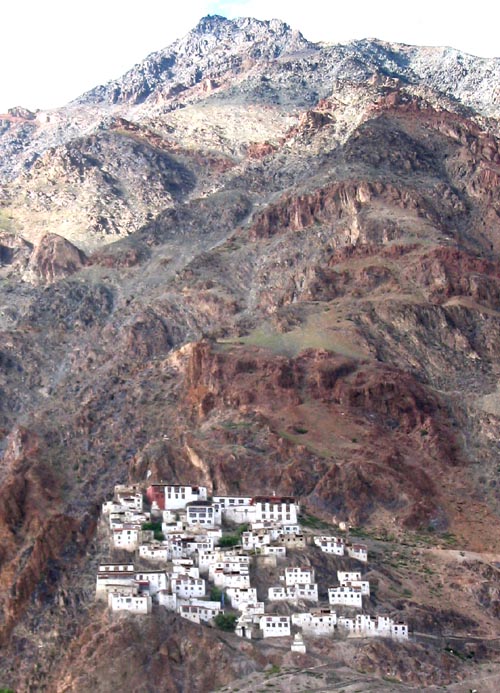
After a beautiful drive through the terraced landscape, river valleys, traditional Bhutanese architecture and chortens (domed monument) we reach Simtokha Dzong, the oldest Dzong in Bhutan (built in 1629). From here, the road winds through pine forests and small villages, and passes by more chortens and prayer flags before heading up to Dochula Pass (10,000′), the first of four passes of the trip. The prayer flags on mountain slopes, bridges and high passes, transmit prayers to the Gods and keep up a constant communication with the heavens.
For the next two hours, the road slowly descends into the lowlands of Punakha valley. In the village of Lobesa, we see Chimmi Lhakhang, a temple dedicated to Drukpa Kuenley, a favorite saint of the Bhutanese, is known affectionately as “the Divine Madman”. The temple is on a hillside in the middle of rice fields and has become a pilgrimage site for childless couples.
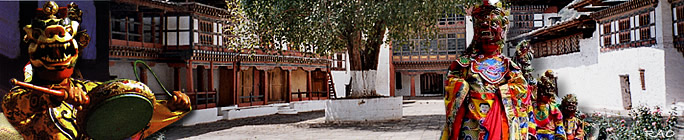
In the morning we witness the Punakha Dromchoe at Punakha Dzong, the “Palace of Great Happiness” built in 1647 by Shabdrung Nawang Namgyel, the saint who unified Bhutan.
Bhutan had in the past defended its sovereignty through ways of skillful mediation, war, and other means of defense strategy. Punakha Dromchoe depicts one of such victories, which have resulted in what Bhutan is today.
The Punakha Dromchoe festival take place in the first month of the lunar year; next festival date is February 18-22, 2010. Other prominent festivals of the first half of 2010 are Punakha Tshechu - February 23-25, Chorten Kora - February 28-March 15, Gomkora - March 23-25, Paro Tshechu - March 26-30, and Ura Tshechu - April 24-28.
The Dromchoe festival ends with ‘Serda’, a magnificent procession which re-enacts an episode of the war against the Tibetan invading troops in the 17th century.
The Pazap (medieval Bhutanese army) in red uniforms rush out of the dzong, flourishing swords at the head steep wooden stairs at the entrance. With the deafening sound of firecrackers, the Pazaps leap into horsebacks to ride into battle.
The Serda Berkhor procession at the end of the festivities is led by the Je Khenpo (Chief Abbot of Bhutan) who comes out of the dzong amidst great fanfare, led by troops and Pachham dancers, to pray on the banks of the river and to proclaim the victory of the Bhutanese forces.

Crackdown in Tibetan-populated Areas and Lithang Festival
by TomBel on Mar.08, 2009, under Asia, China, Journeys of a Lifetime, Tibet, carnivals & festivals, headline news, hiking & trekking, unique festivals
Canceled in 2008 because of protests and calls for Tibetan independence the previous year, the annual Lithang horse-racing festival may not happen once again this year if the situation in Tibet and much of the Tibetan-populated areas will turn for the worse in coming days. Tensions have been reported as high ahead of the 50th anniversary on March 10 of a failed uprising against Chinese rule in 1959 that led to the Dalai Lama fleeing into exile in India. As last year, once again this February and March the towns across the Tibetan plateau are being sealed off from visitors with armed Chinese troops on heightened alert to prevent any repeat of last year’s explosion of discontent.
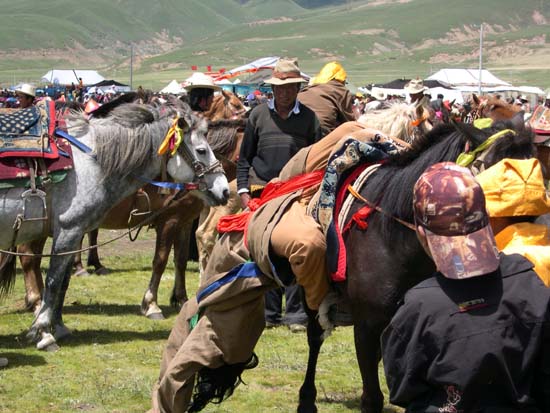
The annual Lithang festival, scheduled once again to be held in Mola Grassland in vicinity of Lithang from August 1 to August 8, a grand gathering of Tibetans to race, compete in acrobatic stunt riding and archery, is an experience to add to your list of places and events to must-see in your lifetime. To witness thousands of Kampa Tibetans gather decked in striking traditional garb and ornaments singing and dancing in an ambiance of nomadic atmosphere is one of those cultural celebrations that should not only be allowed to be staged every year but encouraged as well as protected as mankind’s cultural heritage. Unfortunately as individual tourists as well as tour operators have been banned from bringing their clients to Tibet, Westerns Sichuan and Gansu, and to make sure no uninvited visitor slips through troops block approach roads, more of the same hardline treatment dished out by the Bejing regime breeds more resentments worldwide, the crackdown induces a thouoght that China’s Tibet policy, they themselves, one could only hope, should finally realize is indeed in need of an overhaul.
Panama Celebrates Independence Day
by TomBel on Nov.04, 2007, under Panama, carnivals & festivals

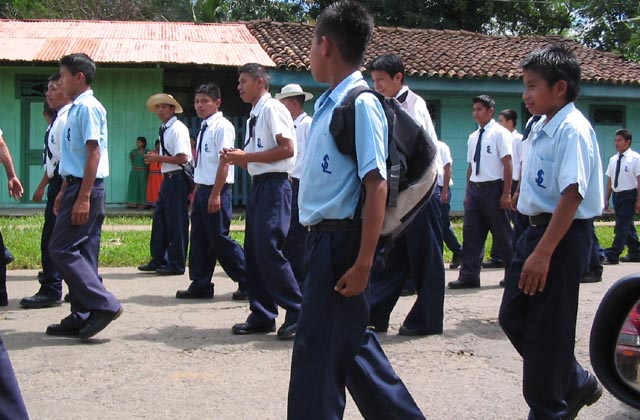
Panama was settled by the Spanish in the 16th century and it was not until 1819 that Panama declared its independence from Spain. It then joined Simon Bolivar’s Republic of Gran Colombia, a federation made up of Venezuela, New Granada and Ecuador, that dissolved some eleven years later when subsequently Panama became a province of New Granada, later to be renamed Colombia. This was an unstable relationship that lasted seventy three years until finally on November 3, 1903 Panama broke off from Colombia. The US navy prevented the Colombian military from sailing to Panama and an assault overland through the Derian Gap, the deep jungle between Panama and Columbia, was impossible. Panama became a new republic. November 3, the Separation Day, is celebrated all over Panama as the Independence Day from Columbia, and with zest where even small communities organize parades teeming with dancers dressed in traditional Panamanian clothes and school bands.


Panama’s Carnival
by ph on Feb.21, 2007, under Destinations, Panama, carnivals & festivals, unique festivals
Today conclude the carnival celebrations in Panama that have been in progress since Friday. The festivities started with the Coronation of the Carnival Queen and from then on it’s been five days and nights of non-stop partying all over Panama. The most lavish and traditional festivities are known to take place in Las Tablas on the Azuero peninsula, that is believed to produce the most ravishing Carnival Queen, show off girls with the most stunningly embroidered or appliqued polleras, and display the most creative floats. Las Tablas is considered to be the best place in the country to celebrate and experience the carnival.
During the day the “mojaderas” water is sprinkled on carnival participants in the streets, in the afternoons the parades take place, and by night the Seco, the white cane spirit, flows and dancing to the latest Reggae, Soca and Merengue continues until dawn in the toldos and bohios, the open-air dance halls, all throughout Panama. Panama’s Carnival is the same as New Orleans’ Mardi Gras and their counterparts in Rio and elsewhere in all Latin countries are a modern version of the old Roman Lupercalia. For more and lots of great pictures go to Carnaval de Panama 2007. For more on Panama’s carnival and other worthy Panama info see CZBrats.