Top Travel Leads

active vacations

Village Walks in Binsar Wildlife Sanctuary, Kumaon, India

by TomBel on Sep.09, 2009, under India, active vacations, wildlife watching

image014Binsar is a wildlife sanctuary under the management of Corbett National Park. Within its boundaries are hamlets whose residents have lived for centuries in close proximity of the forest and wildlife, and whose livelihood is interdependent with nature. The development and progress made in other villages of the region has eluded these hamlets due to stringent dscn5959laws, remoteness of locations and the fact the people would feel resentment towards the Sanctuary unless efforts are made to integrate them into activities which empower them economically and socially. The concept of the village walks is to introduce nature lovers to the world of the forest dwellers and the hamlets within Binsar, creating a sustainable livelihood for the villagers and motivating them to appreciate and protect the unique biodiversity of the sanctuary.

The village walks are hosted by a local professional operator, Alpine Adventure, and the residents of five of the hamlets in the Sanctuary: Gaunap, Katdhara, Pataniyanail, Dalar and Rishal.

image004The walks take visitors through both the upper and lower reaches of Binsar, through oak and pine forests, up crests with stunning views of the Himalayas and surrounding areas and down valleys with streams and thick undergrowth. Starting from the North face of Binsar the walks go round the south and west faces of the mountain and return to the top. En route visitors will see hundreds of varieties of plants and wildlife, namely ghoral, barking deer, langur monkeys, wild boar, and possibly even a leopard. For birdwatchers there are 400 species of resident and migratory birds in Binsar Sanctuary. Combined with the great outdoor and a forest adventure are the lovely villages with their terraced fields, stone houses, and their dignified and hardworking inhabitants. In spite of the hardships of life and relative backwardness of the area, the people are proud and exude an inner strength and resolve as well as gentleness and joy. Visitors are guaranteed to come away nourished and refreshed by the experience.

Go to sample Binsar Village Walks itinerary.

For more info contact Alpine Adventure ‘Outdoor Programs’

Leave a Comment :, , , , , , , , , , , , , , , , more...

Wayside Chapels, Calvary Shrines, Statues and Devotional Memorials in Bohemia and Moravia

by tb on Jul.26, 2009, under Bicycle Vacations, Czech Republic, Folk Baroque, active vacations

Traveling the back roads of Czech Republic along the Austria border an art connoisseur will enjoy coming across a profusion of small roadside shrines and memorials devoted to Jesus and other saints, built as expression of thanks for being blessed, protected, healed, endowed, in memory of someone’s death, or simply as a gesture of good will. In Czech Republic these shrines are commonly referred to as „Bozi Muka, in literal translation meaning “God’s suffering. “ They were being constructed as early as in the 14th century, however, their golden period of construction begins with the baroque period, from 1600 to 1750, though they proliferated right up to the very end of the 19th century and as late as the period of the Czech “first republic,“ namely in the 1920s. The chapels and monuments were typically constructed along small country roads, forest trails, at crossroads and often under large and dominant ancient trees. Often a time these monuments were also being constructed by the wealthy as gifts to a village or to mark a site, and as their counterparts in Buddhist lands, where mani walls and stupas too were being built to gain merit on the judgment day. Some of the best opportunities for seeing these shrines can be had on the bicycle tours along the Czech Greenways Vienna to Prague and Salzburg to Prague.

bozi-muka1

bozi-muka2

bozi-muka3

bozi-muka4

bozi-muka5

bozi-muka6

bozi-muka7

bozi-muka8

bozi-muka9

Leave a Comment :, , , , , , , more...

Trekking Nepal - Limbuwan, the Land of the Limbus

by tb on Jun.30, 2009, under Himalayas, Himalayas Architecture, Nepal, Vernacular Architecture, active vacations, art & architecture

This post is a continuation of my earlier posts on other ethnic groups found along the Arun River in Eastern Nepal, namely Rais and Lhomi Tibetans, a great trekking destination Characteristic front elevation of the Limbu houseLimbus"Limbuwan", the land of the Limbus in eastern Nepal midlandsthat most trekkers to Nepal overlook.

The way of life in the Himalaya is determined by the Himalayan topography, altitude, and climate, factors which quite substantially differ from region to region, plus, naturally, by the cultural diversity of the individual ethnic groups. Closer look at the variety of ethnic groups that populate this impressive mountain range reveals fascinating mix of architectural house styles.

In terms of settlement characteristics, each of the Himalayan racial groups prefers its own altitude and peculiar Limbuwan, fertile land of the Limbus, rice the most important crophabitat. No other part of the Himalayas is as rich in house design styles as the Nepal Himalaya. Most of the Nepal Midlands, the principal settlement belt between the High Himalaya to the north and the Mahabharat range, or the front range, to the south, have been settled by the Ancient Nepalese races. Their villages range from the low river valley floors of some 2,500 feet above seas level up to 8,000 feet in elevation, above which only seldom even today they can be found. Of the seven major population groups belonging into this ethnic entity, Limbus, who have settled in far eastern Nepal, build one of the more remarkable house types.

Covered by lush monsoonal forests, the ridge of the Mahabharat range in the eastern Nepal separates the fertile lowland of Terai from “Limbuwan”, the Land of the Limbus. Poetically sited below steep hillsides of the Mahabharat Lekh or dotting the rolling land of the eastern Nepal Midlands, the dispersed villages of the Limbus are found between altitudes of 2,500 to 5,000 feet above sea level.  Traditionally also referred to by the Limbus themselves as the “Pallo-Kirant” or “Far-Kirant”, this region includes an area east of the Arun river and west of the Nepal-India border.

Limbu house surrounded by flowering mustard fieldsSited conventionally amid dry cultivated fields, the yards of the Limbu houses may often be beautified by planted beds of colorful flowers. The houses are built of stone, mud packed, and characteristically washed with white and ochre mud. Typically, each Limbu house has the same type of front elevation.  It is entered via a small porch, constructed like the balcony above it out of timber or bamboo.  Designed with a small window above the balcony, the roof is of a gable type.  Although in most instances the houses are roofed with thatch, the most prominent of the Limbus cover their houses with sun-baked shingles.  For the most part, there is not much variation in the design, although here and there one may come across interesting horn-like tiles extending upwards from the ends of the gable triangle, a feature reminiscent of the Far Eastern architecture. 

LimbusThe main living and sleeping area, including the kitchen hearth, is on the ground floor.  Grain, seeds, tools, and different sorts of family valuables are ordinarily stored on the second floor. Cattle is kept in shelters built in the vicinity of the house. Characteristic house type of the Limbus with bamboo balconyLocal carpenter making traditional window Limbu house under construction


If you’ve got the time and would prefer a trekking route to Namche Bazaar and the Sherpa regions below Mount Everest that is less traveled, start your trek in Eastern Nepal, from Dhankuta or Ilam. This is certainly a great alternative approach route to Namche than the one from Jiri, which sees lots of trekkers especially in October and November. One way or another trekking from Eastern Nepal to Solu-Khumbu offers a more complete experience of Nepal than a direct flight to Lukla from Kathmandu.  

1 Comment :, , , , , , , , , , , , , , , , , more...

Bicycle Vacations in Italy, Switzerland and France
by TomBel on Feb.20, 2009, under Bicycle Vacations, Europe, France, Italy, Mediterranean, Switzerland, active vacations, cycling, unique islands, unique towns

If you love bicycling and Italy, taking a cycling vacation in Tuscany or Sardinia is a must. Prefer high mountains, how about Switzerland and riding the Alps? If you love France, bicycle around Provence and climb Mount Ventoux, the Giant of Provence!

Whatever your decision you will find that any one of these trips will be a perfect combination of fine riding in company of like-minded people as yourself, all bicycle enthusiasts, that love riding together and enjoy good food and lodging in charming inns. The trips are designed to appeal to riders who prefer an active cycling vacation but perhaps not overly challenging rides, wanting just as much to enjoy the pleasures of Europe as to ride, as well as those who like to challenge themselves and do not shy away from the most demanding routes.

Cycling trips are in groups of 8 - 16 cyclists and range from 4 to 9 days, from Spring to Fall. There is a tour focusing on rides around the Maggiore Lake in Northern Italy with daily rides of about 70 km each. Lodging base is in Stresa, at the 4* Regina Palace Hotel.

Bicycle vacations in TuscanyIn Tuscany tours start from Gaiole in Chianti and go to the Orcia valley, stop in Rocca d’Orcia (4* Castello di Spaltenna hotel), then take a different route back to Gaiole.

Around Sardinia, an easy tour, “Costa Smeralda Charme”, is six days of cycling, a great tour that includes five rides promising you’ll discover the true beauty of Sardinia (4* Delphina Cala di Lepre hotel).

Raid of Swiss Alps tour, a six days raid through Switzerland departing from Stresa, a thrilling route in the Alps and among the Swiss glaciers. Possible routes include the Susten Pass, the Furk Pass and the well-known passes of San Gottardo and Sempione.

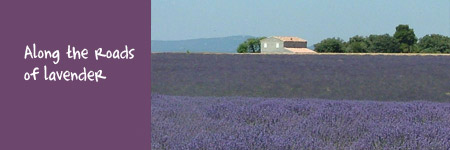
Bicycle vacations in ProvenceAnd then there is France, and splendid in mid summer of July it is on a marvelous six days tour of rides with a base in one of the most beautiful locations of Provence, Gordes. The rides will take you along romantic back roads teeming in colors of Provence, the ambiance of the lavender in blossom, and include the rewarding climb of Mont Ventoux.

The trips and locations are selected not only for their unique landscape and natural beauty but above all for the memorable character of the cycling routes, each truly one of a kind that can be found only in these parts of Europe.

For tour details visit www.bikeitaliarando.com

Book / Inquire / Contact Us

Leave a Comment :, , , , , , , , , , , , , , , , , , , more...

Cesky Krumlov, a fine UNESCO town in south Bohemia

by TomBel on Feb.12, 2009, under Czech Republic, UNESCO sites & monuments, active vacations, cycling, unique towns

Cesky Krumlov, a medieval town in south Bohemia, Czech RepublicCesky Krumlov is a UNESCO world heritage town in south Bohemia, Czech Republic. Founded in the late 13th century at a ford in the Vltava River, Czech Krumlov grew in prominence due to its location on an important trade route between Linz and Prague. Gothic, Renaissance, and Baroque architectural styles dominate its old town core. When visiting Czech Republic make sure you include Cesky Krumlov in your itinerary. One of the best way to experience it is to arrive by bicycle or on foot along the Czech Greenways that connected all the main market towns of medieval Central Europe, now maintained as scenic bicycle and hiking trails. One of the most scenic greenways is to cycle the Vienna to Prague route, a great idea for a bicycle vacation.

For details of festivals and other evens in Czech Krumlov, see the town information website.

Leave a Comment :, , , , , , , , , , , , , , , , , , more...

Looking for something?

Use the form below to search the site:

Still not finding what you're looking for? Drop a comment on a post or contact us so we can take care of it!

Travel Blog Directory