unique festivals
Kumbh Mela 2010 at Haridwar, India
by tb on Dec.05, 2009, under India, Journeys of a Lifetime, unique festivals
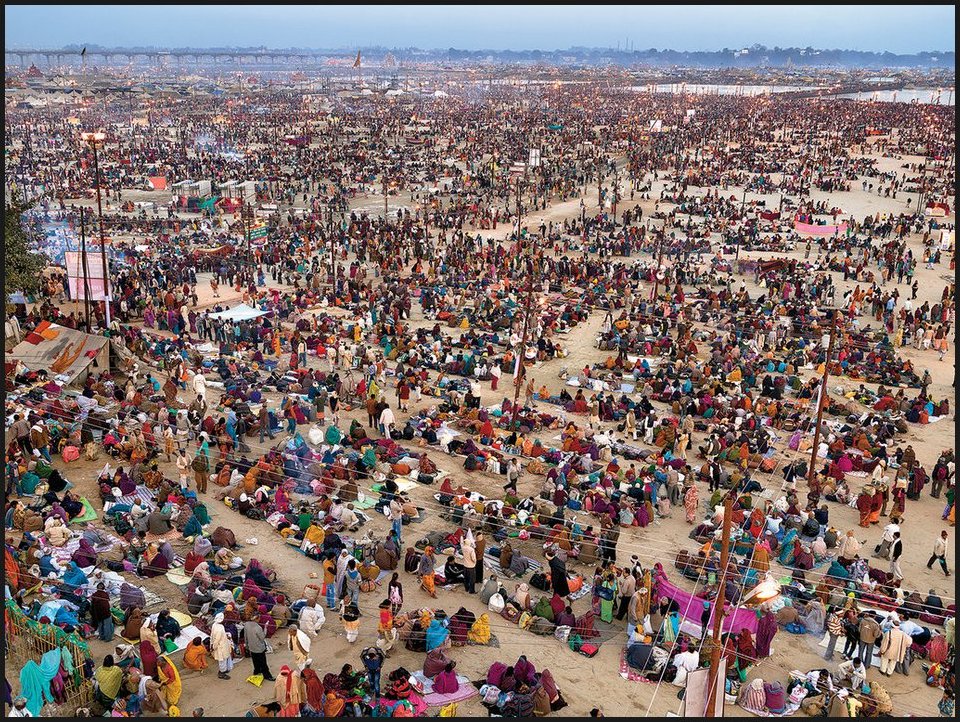
Known as the largest religious gathering of mankind, the Kumbh Mela refers to a great gathering of Hindu pilgrims at auspicious locations. It takes place four times every twelve years, thus every three years, and rotates among four locations.
The most auspicious of these is Allahabad, known as the Prayag, the legendary confluence of the mighty Ganga, its tributary Yamuna and the mythical Saraswati River of the Hindu scriptures. At the Prayag occurs every 12 years the Maha Kumbh Mela, or the Great Kumbh Mela, next being in 2013. It is also at Allahabad that the greatest of the Maha Kumbh Melas is staged every 144 years, as the cycle of 12 Purna Kumbh Melas has been completed.
The last time the Maha Kumbha Mela had taken place was in 2001, when the most auspicious dates signified an exceptionally potent planetary equation of cosmic energy and the count of those in attendance had been given between 80 to as much as 100 million people.
Haridwar, a town on the Ganges river in northern India, Ujjain on the Kshipra River and Nashik on the Godavari River are the other three Kumbh Mela sites. The next Kumbh Mela, following 2004 Ardha Kumbha Mela, half-Kumbh mela, occurring every six years, is once again in Haridwar, the previous of which was in 1998.
Located at the foothills of the Shivalik Range, the front range of the Himalayas, Haridwar is one of the most sacred cities of India. Its religious significance stems from its prominent location where the glacier waters of sacred Ganga reach the plains after having tumbled down the course from the Adobe of Snow. It is for the very essence of constituting a gateway to the Himalaya that Haridwar carries its name, the Dwar of Har or Gateway to God, with its bathing ghat as the ultimate site, the awe inspiring Har-ki-pauri, or Lord Shiva’s Steps, from which pilgrims and holy men alike dip into the freezing waters of the Ganga.
Dates of the Haridwar Kumbh Mela are given as starting from January 14 and lasting until April 28, 2010. In reality the dates of the mela are not arbitrarily set but the starting date of the Kumbha Mela is associated with the astrological alignment of relevant planetary bodies, specifically when the Sun enters Capricorn. By this auspicious date, January 14, 2010, millions of pilgrims are expected to be present already. The date also corresponds with the celebrations of the Makara Samkranti festival throughout India. At the Kumbh Mela the date marks Makar Sankranti Snan, or the date of the First Snan, the First Holy Bath, when countless pilgrims submerge in the Ganga. From this date onwards until April 14, when the most sacred bathing day takes place on full moon day, the Shakh Purnima Snan, and the pilgrims celebrate Buddha’s birth, enlightenment and death, a day when all sins are washed away and the soul enters into union with the One, the Oneness of the Universe, the God Almighty. Between these two most auspicious dates, nine other important bathing dates take place.
For the simple reason of just attending the mela pilgrims believe to be honored with the utmost in blessings, not to mention those of the darshan, the blessings bestowed by the revered sadhus and other holy men, many of whom descend from the High Himalayas and remote caves, interrupting their years-long seclusions in meditation to bath in the Ganga and to appear among the mortals. For it is at the Maha Kumbh Mela to bath in the Ganga River is to taste amrit kalash, the nectar of immortality, and to embark on the ultimate in destiny with chance of ceasing the cycle of birth and rebirth and becoming One with God.
Throughout these three months the site of the Haridwar Kubh Mela becomes a photographer’s paradise. The Kumbh Mela is rendered an exceptional event not only for its spiritual significance and the sheer phenomenal number of mankind gathered but for the astounding myriad of gathered holy men, the sadhus, yogis and saints, that arrive from all corners of India and create an unbelievable spectacle especially bewitching for the Western mind.
The radiant ambiance of all imaginable colors and sounds of horns, trumpets, conchels and drums, shouts and mantras, these spectacles are as nourishing for the soul as they are for the mundane mind wishing just to take pleasure in observing the holy bathing rituals, watching the naked ash-smeared sadhus perform stunning feats of mind and body control, while engulfed in the endless gathering of humanity as well as members of animal kingdom, from monkeys to camels, elephants to beasts of burden, pulling chariots of saints and pilgrims too old to walk but having arrived to partake in the powerful energy, the shakti released by the saints, prophets or devotees alike, rendering the gathering the powerful nourishment that it is and has been for millennia.
Needless to say, if you are to come to the Kumbha Mela as visitor rather than a pilgrim, to find and be at certain sacred spots and witness memorable events throughout this enormous gathering you best know how to find your way around. To make the best of your journey you need a private guide – settle for no less than having someone who truly knows to guide you!
To make your trip to Haridwar Kumbha Mela complete, and to experience more of the unique that India has to offer, having a custom luxury tour of India designed to your specifications is your ideal approach to private independent travel in India.
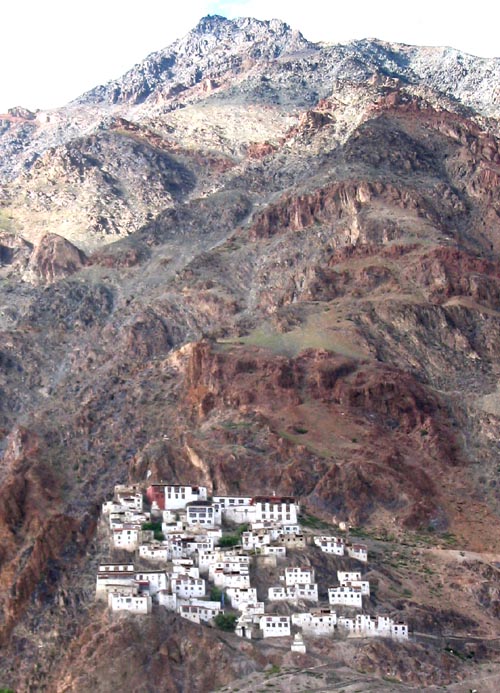
Karsha Festival in Remote Zanskar, the Little Tibet of India
by TomBel on Mar.21, 2009, under Asia, India, Ladakh, Tibet, remote regions, temples & monasteries, unique festivals


With the current lockdown of Tibet and the unlikely chance that even if Tibet reopens once again, tourists will not be allowed to roam about as was possible more than a year ago. It well may be that Ladakh, referred to as the Little Tibet, the most remote outpost of India and a cultural satellite of Tibet, will likely lure more visitors this coming season, June to September, than in recent years.

Ladakh offers the best that adventure and cultural travel in the trans-Himalaya can offer, from warm-hearted people, curious monks and an experience of the perfect harmony in which the locals live amidst their harsh yet stunning environment.
Visit Ladakh and discover Buddhist culture that has enabled its inhabitants to preserve and perpetuate their cultural identity north of the Himalayas – the remoteness and desolation of Ladakh and its thin air high at 15000 feet is truly bewitching, the architecture and Ladakh house style most fascinating, and the warmth of the local people, hardened by the harshness of their environment and life, most inspiring.
Bhutan, Sikkim as well as Nepal Himalayan cultures all stage the traditional Buddhist monastic festivals. In Ladakh, Hemis Gompa has been hailed as the festival to visit in Ladakh. It’s prominence has been in part created due to easy access by road from Leh, the capital. But Ladakh, as Bhutan, offers number of fine festivals and among the most unique is the Karsha Gu-stor festival in remote Zanskar. The festival takes place at the Karsha Gompa, a monastery that huggs a steep mountainside, a spectacular site some 12 kilometers from Padum, Zanskar’s ancient capital.
Being physically the largest Geluk-pa, Yellow Hat, monastery in Zanskar, Karsha monastery is also Zanskar’s largest in terms of resident monks, counting more than 100 lamas. The monks perform sacred dances or ‘chhams’ that commemorate the birthday of Tsongkha-pa, the founder of the Geluk-pa monastic order. Visiting the monastery during this event is a one-time opportunity to experience the colorful gathering of Zanskaris that come from all corners of this remote district of Ladakh, truly a spectacle not to miss. Short flight from Delhi, visiting Ladakh is an easy to do side trip on your India itinerary. Getting to Zanskar can be done trekking overland, a spectacular trek but not a casual hike. Second alternative is an overland journey by jeep, a 2-day venture that is a superb adventure in its own right.
Crackdown in Tibetan-populated Areas and Lithang Festival
by TomBel on Mar.08, 2009, under Asia, China, Journeys of a Lifetime, Tibet, carnivals & festivals, headline news, hiking & trekking, unique festivals
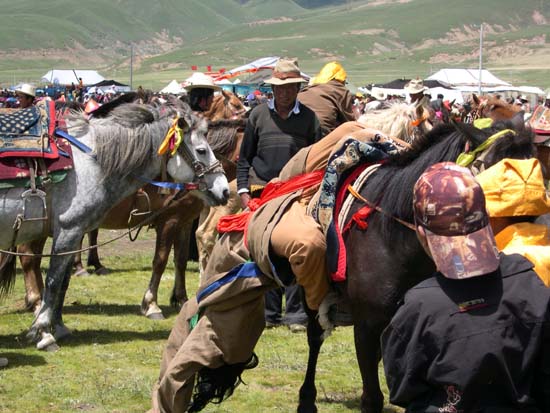
Canceled in 2008 because of protests and calls for Tibetan independence the previous year, the annual Lithang horse-racing festival may not happen once again this year if the situation in Tibet and much of the Tibetan-populated areas will turn for the worse in coming days. Tensions have been reported as high ahead of the 50th anniversary on March 10 of a failed uprising against Chinese rule in 1959 that led to the Dalai Lama fleeing into exile in India. As last year, once again this February and March the towns across the Tibetan plateau are being sealed off from visitors with armed Chinese troops on heightened alert to prevent any repeat of last year’s explosion of discontent.
The annual Lithang festival, scheduled once again to be held in Mola Grassland in vicinity of Lithang from August 1 to August 8, a grand gathering of Tibetans to race, compete in acrobatic stunt riding and archery, is an experience to add to your list of places and events to must-see in your lifetime. To witness thousands of Kampa Tibetans gather decked in striking traditional garb and ornaments singing and dancing in an ambiance of nomadic atmosphere is one of those cultural celebrations that should not only be allowed to be staged every year but encouraged as well as protected as mankind’s cultural heritage. Unfortunately as individual tourists as well as tour operators have been banned from bringing their clients to Tibet, Westerns Sichuan and Gansu, and to make sure no uninvited visitor slips through troops block approach roads, more of the same hardline treatment dished out by the Bejing regime breeds more resentments worldwide, the crackdown induces a thouoght that China’s Tibet policy, they themselves, one could only hope, should finally realize is indeed in need of an overhaul.
Bhutan Monasteries
by TomBel on Jan.13, 2008, under Bhutan, Himalayas, Journeys of a Lifetime, temples & monasteries, unique festivals

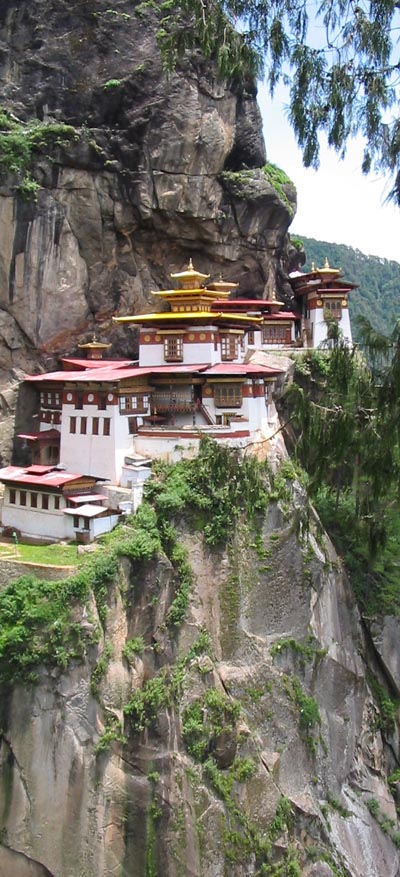
Taktshang Monastery, Tiger's Nest, near Paro, Western Bhutan
The country of Bhutan is home to hundreds of thousands of traditional Tibetan Buddhists. To penetrate the veil of this closed kingdom, however, you need to obtain the services of an experienced travel organization: Footloose Bhutan. As a unique, affordable, tailor-made tour seller, we have been coordinating adventures to the most far-flung regions of earth for over 30 years. Footloose Bhutan tours eschew the mundane for the exotic, and all staff members work diligently to ensure safe travel experiences.
One of the most monastery-rich regions in the country is Bumthang. On Footloose Bhutan’s Bhutan Photo Adventures tour, a 14-day trip, tourists are taken into a number of the most historically critical and beautiful monasteries in the country. Glimpse the fortress of the white bird, otherwise known as Jakar Dzong, and attend the Thangbi Mani festival.
Later, you can visit the Buddhist Stupa known as the Chendebji Choeten in Punakha. This fortress was constructed in the 1900s by religious visionary Lama Shida. Explore the description of the Bhutan Photo Adventure package in detail to read more about the peculiarities of Lama Shida’s Stupa construction.
No monastery tour of Bhutan would be complete without a trek to the Taktshang Monastery, in the West known as “Tiger’s Nest,” in Paro. This destination is incredibly sacred to the Bhutanese people, and it is situated amidst some of the most splendid natural settings anywhere in the Himalayas. Paying homage to Bhutan’s monasteries is an experience that transcends cultural boundaries and leaves a far more lasting impression than the typical travel destinations. Best time to experience one of the monasteries is to visit during one of Bhutan’s festivals (Festival Dates, and Festival Tours in Bhutan). Plan your Bhutan tour now as hotel accommodations are limited.
Pushkar Fair, Rajasthan, India
by TomBel on Oct.07, 2007, under India, Travel Style & Interests, unique festivals
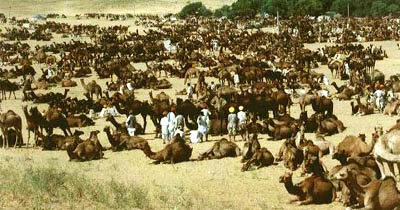
Experience one of India’s most fascinating festivals, the annual Pushkar Fair in Rajasthan. Every year, thousands of Rajasthani village converge in this picturesque town to buy and sell camels and other cattle. They come for the entertaining camel-races and local circuses. Crowds of village folk also browse the local markets for camel saddles, textiles, glass bangles, and silver jewelry. They wash away the day’s fatigue at the Pushkar Lake (considered sacred by Hindus). Beyond the bustle of the market is the sweeping expanse of desert, dotted with thousands of camping families. All around, there is a riot of color and throng of warm, joyous faces. Tented Camps are erected during the Pushkar Fair as the town does not have enough hotels to accommodate the large number of tourists who visit the festival.